/Hashing vs Encryption
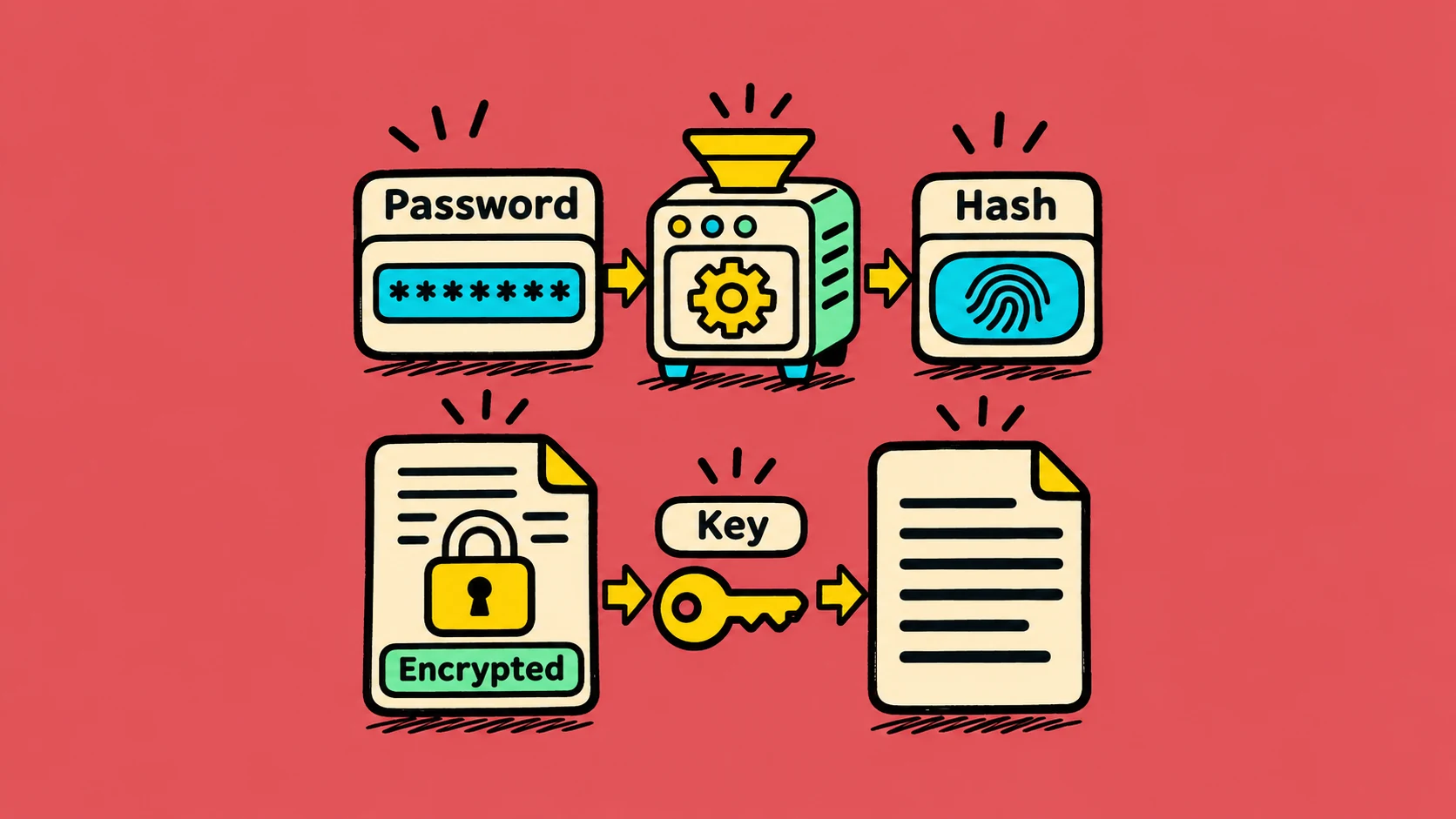
Hashing and encryption both change data, but they solve different problems. The key difference is whether the original data can be recovered.
Hashing makes a one-way fingerprint
A hash function turns input into a fixed-length result called a hash. A good cryptographic hash is designed so you cannot work backwards to get the original input.
Example: a website should not need to read your password after you create it. It can store a protected password hash. At login, it hashes the password you typed and checks whether the result matches.
Password storage needs special protection. Apps should use a password-hashing tool such as Argon2id or bcrypt, with a unique salt and safe settings. A fast general-purpose hash alone is not enough.
Encryption can be reversed with a key
Encryption changes readable data into protected data. Someone with the correct key can decrypt it and read the original. For example, an app may encrypt a private file while it is stored.
Use the right tool
- Use password hashing when the app only needs to check a password.
- Use encryption when the app must later recover the original data.
Think of hashing as making a fingerprint you compare later. Encryption is like locking a letter in a box that can be opened with a key.