/What Is Caching, and Why Does It Make Websites Faster?
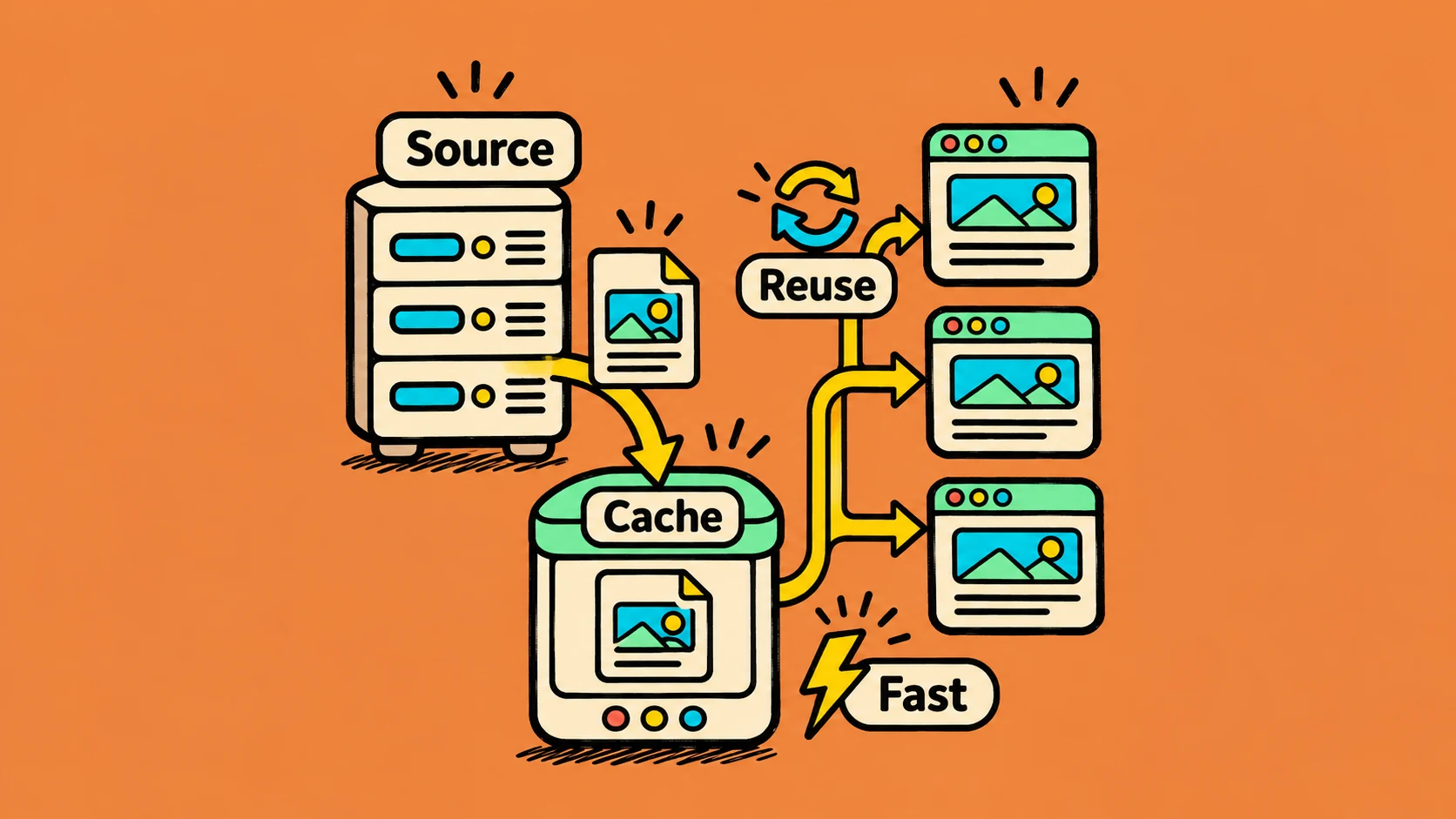
If you use the same book every day, you might keep it on your desk instead of walking to the library each time. A cache works in a similar way: it keeps a temporary copy close to where it is needed.
Reuse instead of repeating work
A browser can cache an image or stylesheet. On your next visit, it may load that file from your device instead of downloading it again. A server can also cache a result that would otherwise take a slow database query to calculate.
Example: a dashboard shows the same public list of countries to every visitor. The server could keep that list in a cache for a short time instead of asking the database on every page load.
Cached data can become old
A cache is useful only when the saved copy is still safe to use. If the country list changes, the app needs a way to refresh or remove the old copy. This is called cache invalidation.
Some data should not be shared through a public cache. A private account page, for example, must not show one person’s information to another person.
Choose a clear rule
A cache rule can say how long a copy may be reused, which changes remove it, and whether it belongs to one user or everyone. Measure the app before adding a cache; sometimes a simpler database query is enough.
Caching can make an app faster by avoiding repeated work, but it adds a freshness question: how will the app know when the saved copy needs an update?